Salmon Panang Curry
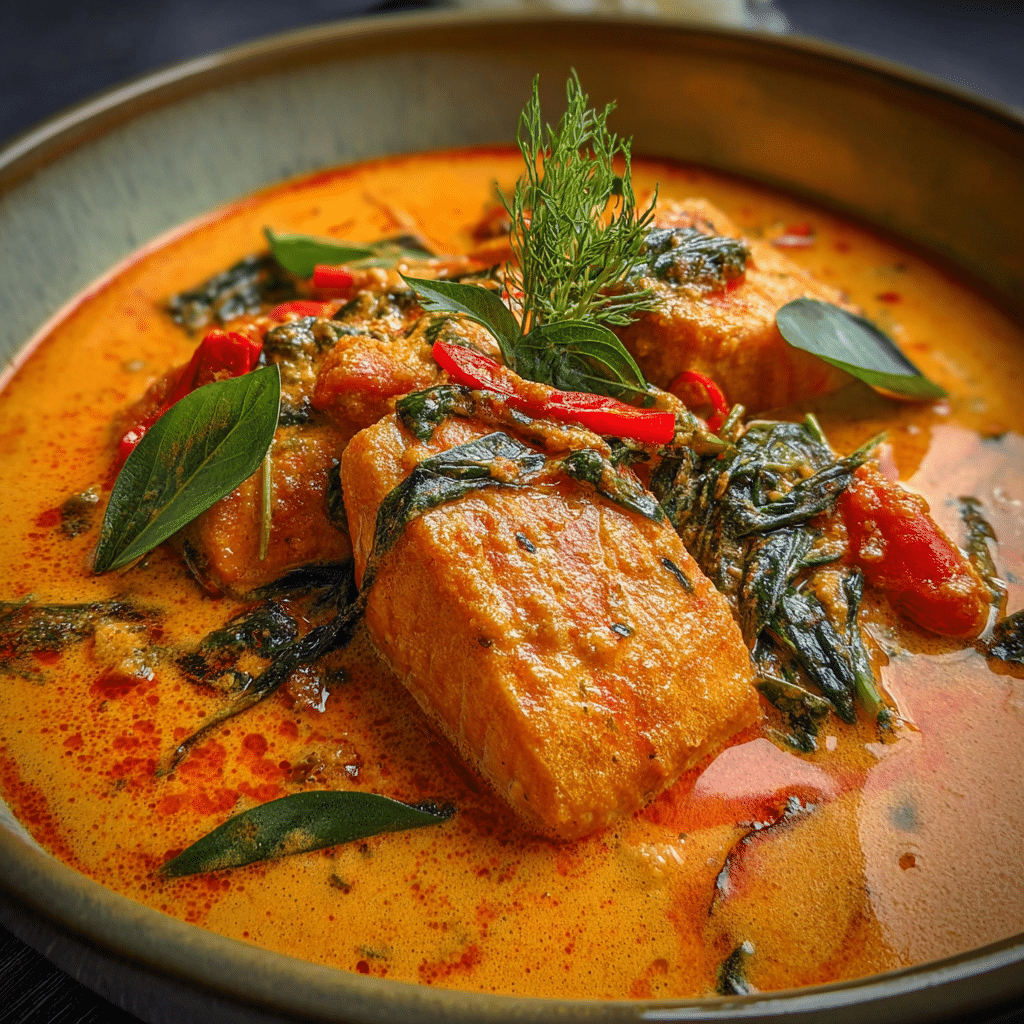
If you’re craving a rich, creamy, and slightly spicy dish that’s bursting with flavor, you’re in for a treat. This Salmon Panang Curry recipe is delicious and simple, ready in minutes, making it perfect for a quick yet impressive weeknight dinner. Combining tender salmon with fragrant Panang curry paste and a velvety coconut milk sauce, this dish delivers vibrant Thai flavors that warm your soul and excite your taste buds.
Why You’ll Love This Recipe
- Quick and Easy: Ready in under 30 minutes, it’s perfect for busy weeknights or last-minute meals.
- Rich Flavor Profile: The combination of Panang curry paste and creamy coconut milk creates a balanced blend of spicy, sweet, and savory notes.
- Nutritious and Wholesome: Salmon provides omega-3 fatty acids and protein, making this a healthy and satisfying choice.
- Impressively Elegant: Feels like a restaurant-quality dish but requires minimal effort.
- Versatile: Easy to customize for dietary preferences and ingredient availability.
Ingredients You’ll Need
The ingredients for this Salmon Panang Curry are straightforward yet essential for delivering authentic and vibrant flavors. Each item plays a key role, from the creamy richness of coconut milk to the aromatic depth of fresh herbs.
- Salmon fillets: Choose fresh, skinless pieces for tender, flaky results.
- Panang curry paste: This thick, flavorful paste is the heart of the dish, providing its distinctive taste.
- Coconut milk: Adds creamy richness and balances the curry’s spice.
- Fish sauce: Brings umami and authentic salty flavor.
- Brown sugar or palm sugar: Balances heat with a touch of sweetness.
- Kaffir lime leaves: Impart citrusy fragrance that brightens the curry.
- Fresh Thai basil or regular basil: Adds herby freshness right before serving.
- Red chili or chili flakes (optional): For extra heat, if you like it spicier.
- Vegetable oil: For sautéing the curry paste and releasing its flavors.
Variations for Salmon Panang Curry
This recipe is wonderfully adaptable, allowing you to tweak it based on what you have on hand or your taste preferences. Feel free to experiment and make it your own.
- Protein Swap: Substitute salmon with shrimp, chicken, or tofu for variety.
- Dairy-Free Option: Stick to coconut milk and avoid any dairy additions to keep it authentic and vegan-friendly.
- Vegetable Add-ins: Include bell peppers, green beans, or snap peas for added crunch and nutrition.
- Spice Level: Adjust the amount of Panang paste or add fresh chilies to suit your heat tolerance.
- Herb Choices: Experiment with cilantro or mint instead of basil for a different herbal touch.

How to Make Salmon Panang Curry
Step 1: Prepare the Ingredients
Begin by slicing the salmon into bite-sized chunks or leaving the fillets whole, depending on preference. Have your curry paste, coconut milk, fish sauce, sugar, and kaffir lime leaves ready to go. Fresh herbs should be washed and set aside for the final garnish.
Step 2: Sauté the Panang Curry Paste
Heat vegetable oil in a large skillet or wok over medium heat. Add the Panang curry paste and stir-fry for about 1-2 minutes until fragrant. This step helps release the essential oils and deepens the curry’s flavor.
Step 3: Add Coconut Milk and Simmer
Pour in the coconut milk, stirring to incorporate it with the curry paste. Add kaffir lime leaves and let the mixture simmer gently for 3-5 minutes; this allows the flavors to meld and the sauce to thicken slightly.
Step 4: Cook the Salmon
Carefully add the salmon pieces into the pan, making sure they are submerged in the sauce. Simmer gently for another 5-7 minutes or until the salmon is cooked through but still tender. Avoid overcooking to keep the fish moist.
Step 5: Season and Finish
Add fish sauce and brown sugar to balance the salty and sweet notes. Taste and adjust seasoning if needed. Before serving, stir in fresh Thai basil leaves and optional chili flakes for a final punch of flavor and aroma.
Pro Tips for Making Salmon Panang Curry
- Use Fresh Salmon: It makes a noticeable difference in flavor and texture.
- Don’t Rush Stir-frying: Heating the curry paste well unlocks deeper, more complex flavors.
- Control the Heat: Add chili gradually to find your perfect spice level.
- Keep It Saucy: Use full-fat coconut milk for a creamier, more luxurious curry sauce.
- Garnish at the End: Adding herbs right before serving preserves their fresh, vibrant taste.
How to Serve Salmon Panang Curry
Garnishes
Fresh Thai basil or regular basil leaves bring a burst of fragrant freshness. A few slivers of red chili or a sprinkle of chopped peanuts can add color and texture, enhancing both presentation and flavor balance.
Side Dishes
Serve this curry alongside steamed jasmine rice, which perfectly absorbs the rich sauce. Lightly sautéed or steamed vegetables such as broccoli, snap peas, or bok choy also make excellent accompaniments, adding crunch and nutrients.
Creative Ways to Present
For a special touch, serve the curry in individual coconut bowls or garnish with edible flowers and microgreens. Pair with lime wedges to offer a tangy brightness that guests can squeeze over their dish.
Make Ahead and Storage
Storing Leftovers
Place any leftover Salmon Panang Curry in an airtight container and refrigerate for up to 2 days. Flavors intensify overnight, making the dish even tastier the next day.
Freezing
This curry freezes well if stored properly in a freezer-safe container. Use within 1 month for the best flavor and texture. Thaw overnight in the refrigerator before reheating.
Reheating
Gently reheat the curry on the stovetop over low heat, stirring occasionally. Add a splash of coconut milk or water if the sauce thickens too much during storage.
FAQs
Can I use frozen salmon for this recipe?
Yes, frozen salmon works well if thawed properly before cooking, though fresh salmon tends to have better texture and flavor.
Is Panang curry paste very spicy?
Panang curry paste has a mild to moderate heat level, but spice tolerance varies. You can control the heat by adjusting the amount used and adding chilies if desired.
Can I make this recipe vegetarian or vegan?
Absolutely! Substitute salmon with tofu or vegetables and use a vegetarian fish sauce alternative or soy sauce to keep it plant-based.
What can I substitute if I don’t have kaffir lime leaves?
If unavailable, a small amount of lime zest can add some citrus notes, but kaffir lime leaves are unique and highly recommended for authentic flavor.
Is there a way to make the curry less thick?
Yes, simply add more coconut milk or a splash of water to reach your preferred consistency without losing flavor.
Final Thoughts
This easy Salmon Panang Curry recipe is a delightful explosion of flavors that never fails to impress. It’s a fantastic choice when you want an elegant but fuss-free meal full of warmth, spice, and freshness. Trust me, once you try it, it’ll become a fast favorite in your dinner rotation. So why wait? Grab your ingredients and get cooking tonight!
Related Posts
PrintSalmon Panang Curry

A quick and delicious Salmon Panang Curry combining tender salmon fillets with fragrant Panang curry paste and creamy coconut milk. This rich and slightly spicy Thai curry delivers vibrant flavors with a perfect balance of sweet, savory, and heat. Ready in under 30 minutes, it’s ideal for a nutritious, restaurant-quality weeknight dinner that impresses with minimal effort.
- Prep Time: 10 minutes
- Cook Time: 15 minutes
- Total Time: 25 minutes
- Yield: 2-3 servings
- Category: Main Course
- Method: Sautéing
- Cuisine: Thai
- Diet: Gluten Free, Dairy Free
Ingredients
Main Ingredients
- Salmon fillets (skinless, fresh) – 400g (about 2 fillets)
- Panang curry paste – 2 tablespoons
- Coconut milk (full-fat) – 1 can (400ml)
- Fish sauce – 1 tablespoon
- Brown sugar or palm sugar – 1 tablespoon
- Kaffir lime leaves – 3 to 4 leaves
- Fresh Thai basil or regular basil – 1/4 cup leaves, roughly chopped
- Red chili or chili flakes (optional) – to taste
- Vegetable oil – 1 tablespoon
Instructions
- Prepare the Ingredients: Slice the salmon into bite-sized chunks or keep the fillets whole according to your preference. Have the Panang curry paste, coconut milk, fish sauce, sugar, and kaffir lime leaves ready. Wash and set aside the fresh herbs for garnish.
- Sauté the Panang Curry Paste: Heat vegetable oil in a large skillet or wok over medium heat. Add the Panang curry paste and stir-fry for 1-2 minutes until fragrant to release essential oils and deepen the flavor.
- Add Coconut Milk and Simmer: Pour in the coconut milk and stir to combine with the curry paste. Add kaffir lime leaves and let simmer gently for 3-5 minutes, allowing flavors to meld and sauce to thicken slightly.
- Cook the Salmon: Carefully place the salmon pieces into the pan, submerging them in the sauce. Simmer gently for 5-7 minutes or until salmon is cooked through but still tender. Avoid overcooking to maintain moistness.
- Season and Finish: Stir in fish sauce and brown sugar to balance salty and sweet tastes. Taste and adjust seasoning as needed. Just before serving, add fresh Thai basil leaves and optional chili flakes for extra aroma and heat.
Notes
- Use fresh salmon for the best flavor and texture.
- Ensure to properly sauté the curry paste to unlock deep, complex flavors.
- Adjust chili amount gradually to control the spice level.
- Full-fat coconut milk creates a creamier, richer curry sauce.
- Add herbs at the end to preserve freshness and vibrancy.
Nutrition
- Serving Size: 1 serving (approx. 150g salmon with sauce)
- Calories: 420 kcal
- Sugar: 5 g
- Sodium: 800 mg
- Fat: 30 g
- Saturated Fat: 20 g
- Unsaturated Fat: 8 g
- Trans Fat: 0 g
- Carbohydrates: 8 g
- Fiber: 1 g
- Protein: 30 g
- Cholesterol: 75 mg
Keywords: Salmon, Panang curry, Thai curry, coconut milk, quick dinner, spicy curry, healthy salmon recipe